


How Creating Helpful Content Can Improve Google Search Performance

TL;DR: Helpful content is created for humans visiting your website, not search engine crawlers or robots. Google rewards sites that produce actual value to readers by making them more visible in its result pages.
October 9, 2025 ~ By Shari Rose
When someone in your community searches for a nearby service they need, are they looking for a flashy sales pitch or useful information that helps them make a choice? Search engines like Google know that a query like “home care near me” is looking for help, not hype. This is the idea behind Google’s emphasis on “helpful content.” To succeed with Local SEO efforts and improve ranking performance in search, it’s critical that service-based organizations recognize the difference and create content that provides genuinely useful information to its audiences.
As a rule of thumb, Google wants to reward websites that extend value to its visitors. Helpful content serves the needs of your prospective clients and customers by answering their questions and connecting their problems to your solutions. This goes beyond simply trying to rank for keywords in search engine results. For a service-based business, helpful content addresses common concerns, explains their offerings in clear language, shares local expertise and provides useful resources.
The key to remember in organic marketing is that you’re writing for humans, not bot crawlers. Of course keywords matter in Local SEO, but the priority is to create content that is natural, informative and useful to someone who lands on your page. If you removed all the optimization and just asked yourself, “Would someone find this worth their time to read?” the answer should be yes.
Best Practices for Creating Helpful Content
When producing new website content for your business or nonprofit, it’s about finding the balance between serving users and search engines. Here are a few guidelines for writing the type of high-quality copy that can improve your site’s performance in Google search.
Write for Humans First, Bot Crawlers Second
As a professional in your industry, you bring incredibly valuable experience and insight into your local audience’s needs, questions, desires and more. You can lean on that when crafting helpful content for the website. What questions do they ask during consultations? What concerns do they have? What other factors may affect their decisions?

You’ll want to write content that addresses these real-world needs in transparent, conversational language that shows how your services can help. And once you’ve created something genuinely helpful, then it’s time to refine it with research-backed keyword optimization and other SEO considerations. But the priority should always be quality content first, optimization second.
Naturally Incorporate Keywords Where Relevant
It’s easy for some business owners to assume that the more keywords they optimize their websites with, the better they’ll rank on Google. But the truth is, sometimes less is more when it comes to content optimization. Search engines are highly sophisticated platforms that understand language complexity, and can parse through topic relevance, semantics, synonyms and more to determine what exactly a webpage is all about. It’s important to keep in mind that over-optimizing can be a turn off for human readers who may perceive these strategies as too spammy.
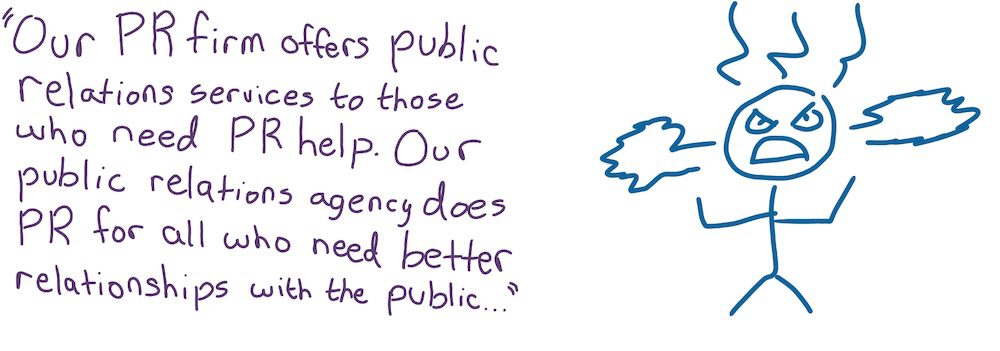 For example, if you’re a family law attorney in Seattle, localized phrases like “Seattle divorce lawyer” or “family law services in Seattle” are certainly important to include throughout the law firm’s website. But it’s crucial to intentionally insert these keywords in places where they make sense contextually, rather than a blanketed approach where they appear a dozen times on every page for the sake of SEO.
Aim to Solve Problems, Not Simply Pitch Prospects
It may sound a little counterintuitive, but the most effective SEO copywriting provides useful information without an aggressive sales pitch. Of course, the goal of creating helpful content is to ultimately convert new visitors into loyal clients and customers, but those visitors are found at the top of the sales funnel, not the bottom. The audience in the research phase of their journey is hoping to learn more about your brand, offerings, expertise, pricing and more.
Information-packed articles, guides, case studies and answers to frequently asked questions work to attract nearby searchers who aren’t prepared to make a choice on a local provider quite yet, but will be later. When they’re ready to make a decision, you’ll be top of mind because they’ve already had a positive experience with your website and built trust through seeing your brand’s expertise in action.
Demonstrate Your Expertise
One of the best ways to create helpful content in SEO is to lean into your own expertise and experience as a local service provider. Your industry knowledge is so valuable to nearby audiences, and Google knows that too. Flex your years of experience by sharing insights that could only come from someone with genuine expertise in the industry.
This type of firsthand content is nearly impossible to replicate with generic, AI-generated articles that are flooding the zone in search engine results. In the age of ChatGPT and other LLM platforms, experience-backed copywriting is a highly impactful differentiator that can significantly improve your brand’s organic performance.
Keep Content Original and Fresh
Duplicated content on a website can have a deeply negative impact on its rankability in search engines. While the occasional instances of an identical phrase on a few pages is to be expected here and there, entirely copied paragraphs or full pages can be a huge red flag to Google. Depending on the severity, these issues often hint at larger spammy tactics or an overall lack of value, which can decimate a website’s visibility in organic search.
National franchises in particular can have a tougher time with duplicate content because of the nature of their organizational structure. When maintaining hundreds, even thousands of branded offices and their websites, scalability is necessary for keeping budgets reasonable. But in digital marketing, that can translate into mass-producing identical web pages for their individual locations. Generally, market localization isn’t enough to differentiate those pages when all other content is virtually the same.
Curious how we tackle the issue of duplicate content for franchises and encourage the creation of helpful content? Take a look at Cause Engine’s SEO case studies covering the strategies we implemented for clients with duplication issues, one a home care franchise and the other an auto repair franchise.
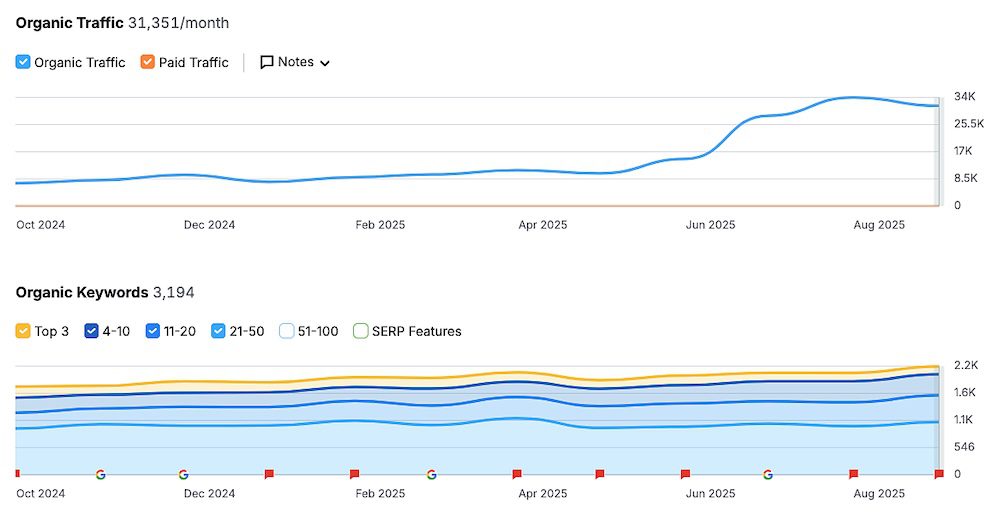
An example of the organic traffic and rankings improvements we achieved for a client.
Google’s Algorithm Updates Regarding Helpful Content
While Google’s emphasis on creating helpful content isn’t new, it was recently reinforced with the August 2025 Spam Update. The search engine is constantly rolling out new algorithm changes, but this one was particularly significant for those who rely on AI-generated copy for their websites.
August’s update specifically targeted three areas: content quality, user experience and the detection of low-quality, scaled content (typically produced through AI without a human’s edits). In the days and weeks after the changes rolled out, many website owners shared that their organic rankings plummeted or entirely disappeared.
What these recent algorithm updates suggest to SEO professionals is that Google’s high expectations for quality, human-first content isn’t going anywhere soon. And those who consistently create helpful content can expect to be rewarded with stronger rankings and more visits from those who are seeking out these websites’ services through organic search.